Last reviewed September 2, 2026
Three dignities held by James P. Howard, II correspond to three named features in Marie Byrd Land: the Krigsvold Nunataks, Mount Rubin de la Borbolla, and Matikonis Peak.
The association supplies Krigsvold with a geography. It does not supply a territory. The titles convey no ownership, sovereignty, jurisdiction, or authority over these places.
Krigsvold Nunataks
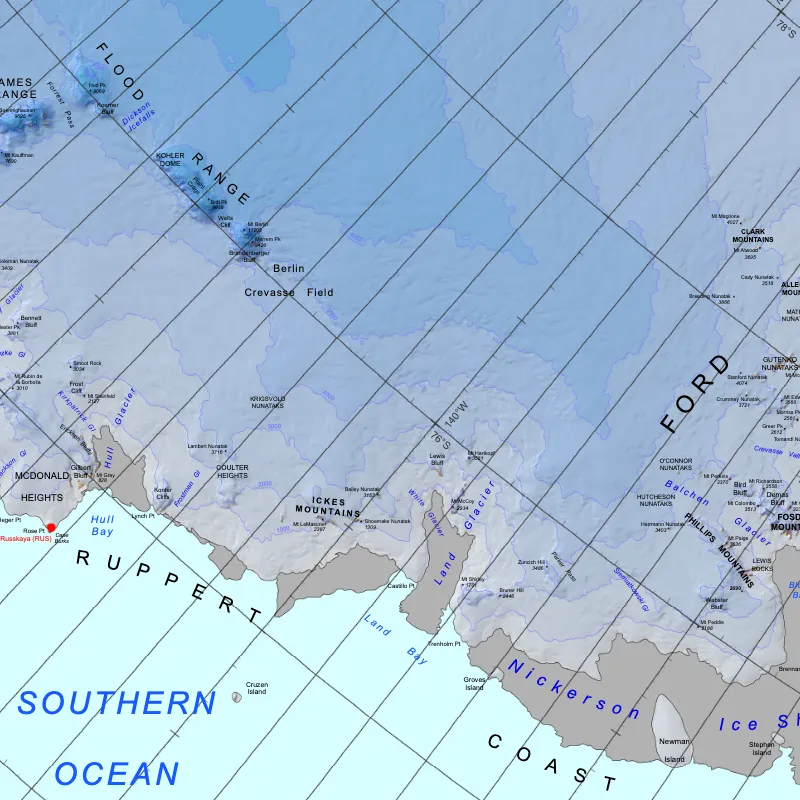
The Krigsvold Nunataks are a group of exposed rocky peaks at the head of Strauss Glacier. A nunatak is rock that rises above the surrounding ice sheet: a fixed point visible in a landscape defined by movement.
The feature was named for Sergeant Alvin I. Krigsvold, following the Antarctic practice of commemorating people associated with exploration and its support. It is the geographic basis of the principal dignity and the source of this site’s name.
Krigsvold’s arms—Azure, a snowflake Argent, a chief invected Argent—render that geography in heraldic shorthand: ice, polar blue, and an irregular ridge breaking through the surface.
Mount Rubin de la Borbolla
Mount Rubin de la Borbolla is a mountain in Marie Byrd Land named in 1974 by the Advisory Committee on Antarctic Names for George S. Rubin de la Borbolla, a meteorologist who served at Plateau Station in 1968.
The name is a reminder that Antarctic knowledge depends on long chains of observation: instruments maintained, records continued, and people working in conditions that make routine measurement anything but routine.
Matikonis Peak
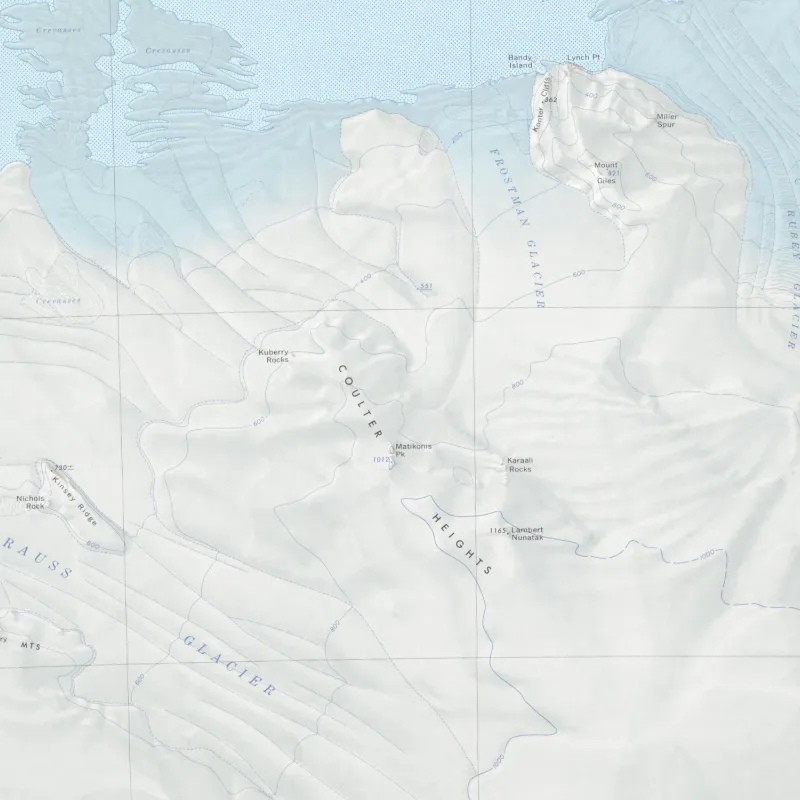
Matikonis Peak stands in the Coulter Heights. It was named for William P. Matikonis and is the feature associated with the dignity Baron of Matikonis.
Like other nunataks and peaks, it makes visible the meeting of ice and rock. It is not evidence of a private claim; it is a named place through which this office keeps its work connected to the actual Antarctic map.
Why the places matter here
Remote advocacy can become vague remarkably quickly. These three names resist that tendency. They require the institution to return to location, measurement, history, and the limits of its own claims. That is useful discipline.